

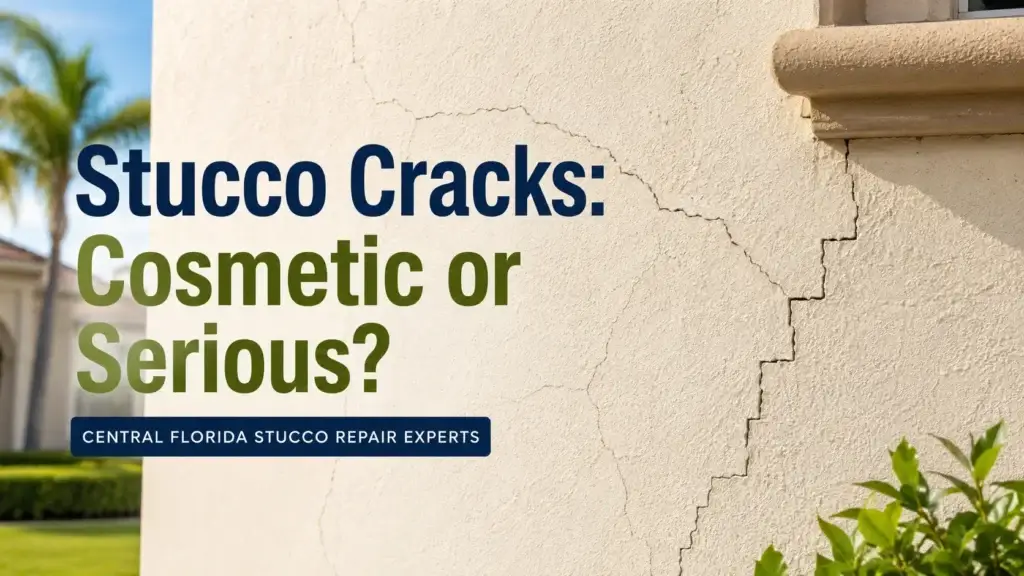
How to Tell If Stucco Cracks Are Cosmetic or a Bigger Problem
If you see a crack in your stucco, do not panic, but do not ignore it either. Some stucco cracks are surface-level hairline cracks. Others are early signs that water, movement, poor installation, or a failed previous repair is starting to create a bigger problem behind the wall.
I am Clyde Lionel, founder of Amazing Stucco, Inc., and after more than 20 years in construction and exterior repair, I can tell you this: the crack itself is only part of the story. What matters is why it opened, whether moisture can get in, and whether the surrounding finish is still sound.
Here is the simple rule I give homeowners: if the crack is thin, dry, stable, and not spreading, it may be cosmetic. If it is widening, staining, soft around the edges, near a window or door, or tied to bubbling or loose stucco, it is worth having a stucco specialist look at it before it turns into a more expensive repair.
Why Stucco Cracks Happen in Central Florida
Stucco is durable, but Central Florida homes deal with heat, humidity, heavy rain, settlement, and regular storm exposure. Over time, those conditions can test the exterior system.
Small cracks can happen from normal movement. Homes expand and contract. Materials shift. Minor settlement can create thin lines in the finish. That does not always mean the wall is failing.
The concern starts when a crack gives water a path behind the stucco. Once moisture gets behind the exterior, the repair is no longer just about filling the visible line. You have to think about the area around it, the substrate behind it, and whether the cause has been corrected.
I have seen plenty of repairs fail because someone treated the crack like a paint problem instead of a wall-system problem. A quick patch might hide the line for a little while, but if water is getting in or the stucco is loose, the crack usually comes back.
When a Stucco Crack Is Usually Cosmetic
A cosmetic stucco crack is typically narrow, shallow, and stable. It may look like a fine hairline crack in the finish coat, especially on a large wall surface that gets sun exposure.
A crack is more likely to be cosmetic when it is very thin, has no staining, does not feel soft or hollow around the edges, is not spreading, and is not located where water naturally collects or drains.
Even then, cosmetic does not mean worthless to fix. Small cracks can still let moisture in during heavy rain if they are left open long enough. The difference is that a cosmetic repair is usually more straightforward because the wall around the crack is still solid.
When a Stucco Crack May Signal a Bigger Problem
The cracks I pay closer attention to are the ones that show movement, moisture, or failure around the repair area.
Call for a professional look if the crack is wider than a hairline, keeps growing, has dark staining or rust-colored marks, feels soft or loose around the edges, appears near windows or doors, shows bubbling paint nearby, or comes back after being patched.
Cracks around windows and doors deserve special attention because those areas depend on proper sealing and flashing. If water gets behind the stucco there, it can create damage that is not obvious from the outside at first.
Stair-step cracks, long diagonal cracks, bulging areas, and cracks paired with hollow-sounding stucco are also worth taking seriously. Those signs can point to movement, weak bonding, trapped moisture, or a repair that was never tied back into a sound surface.
Why I Do Not Recommend Guessing From the Surface Alone
A homeowner can spot warning signs, but the real answer usually comes from inspecting the surrounding area. I look for how the crack behaves, whether the stucco is bonded, whether the surface is taking on moisture, and whether the nearby finish can be blended cleanly after repair.
That is why I do not like one-size-fits-all answers. Two cracks can look similar in a photo and need different repairs in person. One may only need proper crack repair and finish blending. Another may need loose material removed, moisture issues addressed, and the area rebuilt before the finish coat goes back on.
The goal is not to make the crack disappear for a few months. The goal is to repair the cause, protect the wall, and leave a clean finish that belongs on the house.
What a Proper Stucco Crack Repair Should Address
A good stucco crack repair starts with diagnosis. Before any patching happens, the contractor should understand whether the crack is cosmetic, moisture-related, movement-related, or tied to poor previous work.
From there, the repair may involve opening the crack, removing loose material, preparing the surface, using the right repair material, rebuilding the area if needed, and blending the texture so the repair does not jump out from the rest of the wall.
For homeowners who want a deeper look at the type of exterior work we handle, our stucco repair and exterior repair services page is the best place to start.
The part that separates a solid repair from a quick patch is preparation. If the surrounding stucco is loose or wet, covering it up does not solve the problem. If the texture is rushed, the repair may be technically closed but still look wrong from the street.
When to Call Amazing Stucco
If the crack is new, spreading, stained, near an opening, or showing signs of loose stucco, I would rather look at it early than wait until water has more time to work behind the wall.
You do not need to know the exact cause before you call. That is our job. What helps is paying attention to when the crack appeared, whether it has changed, whether the area gets hit by heavy rain, and whether the wall feels solid around it.
At Amazing Stucco, we focus on straight answers, durable repairs, and clean finishes. If a crack is minor, we will tell you. If it needs more than a surface patch, we will tell you that too. The right repair starts with being honest about what the wall is actually showing.
Final Takeaway
A stucco crack is cosmetic when it is thin, stable, dry, and surrounded by solid material. It may be a bigger problem when it spreads, stains, softens, opens near windows or doors, or comes back after patching.
If you are not sure which one you are looking at, get it checked before the next round of heavy Florida rain. A small inspection now can prevent a larger stucco repair later.
Are hairline cracks in stucco normal?
Hairline cracks can be normal, especially on large exterior wall areas exposed to heat and movement. The concern is whether the crack is spreading, holding moisture, staining, or connected to loose stucco around it.
When should I call a stucco contractor about a crack?
Call a stucco contractor if the crack is widening, stained, near a window or door, paired with bubbling paint, soft around the edges, or coming back after a previous patch.
Can I just patch a stucco crack myself?
A small surface crack may look simple to patch, but the real question is why it opened. If moisture, movement, or loose material is involved, a surface patch usually does not last.
Why are cracks around windows and doors more concerning?
Windows and doors are common water-entry points. If the crack is near an opening, the repair may need to address sealing, flashing, or surrounding stucco conditions instead of only filling the visible line.
Can a stucco crack repair blend with the existing wall?
A good repair should be prepared correctly and textured to blend with the surrounding finish. Exact color match can depend on paint age, finish type, sun exposure, and whether the repaired area will be repainted.
